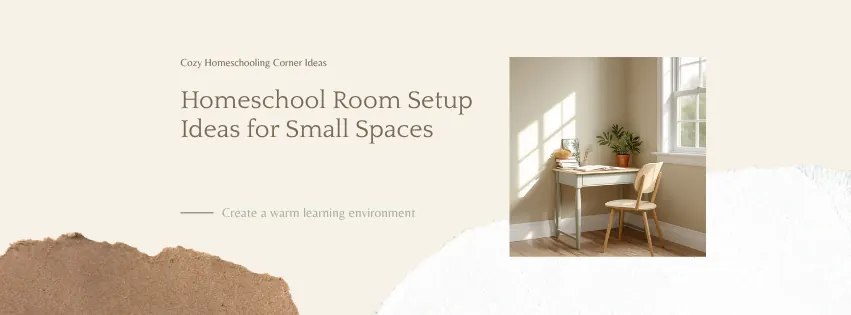
These homeschool room setup ideas for small spaces will show you that you don’t need a lot of square footage to create a dedicated, focused learning environment. With the right layout, smart storage, and a little creativity, you can build a space your whole family loves — even in a small home or apartment.
Whether you’re converting a corner of the living room, a spare closet, or a tiny spare bedroom, these homeschool room setup ideas for small spaces will help you build a focused, functional space your kids actually want to learn in.
Why Your Homeschool Space Matters More Than Its Size
Before we dive into the ideas, here’s the truth: the size of your room matters far less than how intentionally it’s designed. A well-organized 6×6 corner beats a cluttered spare bedroom every single time.
A dedicated learning space — even a small one — signals to your kids that school is real, school is important, and school happens here. That psychological boundary is worth more than square footage.
Homeschool Room Setup Ideas for Small Spaces
1. The Dedicated Corner Setup
You don’t need a full room. A corner of your living room, dining room, or bedroom can become a fully functional homeschool station.
What you need:
- A simple desk or fold-down wall desk
- A small bookshelf or floating shelves mounted above
- A pegboard or corkboard on the wall for schedules, artwork, and supplies
- A basket or bin system for each child’s daily materials
Pro tip: Use a rug to define the learning zone. It creates a visual boundary that helps kids (and you) mentally “enter school mode.”
2. The Closet Conversion (Cloffice Method)
A spare closet — even a shallow one — can become a surprisingly effective homeschool nook. Remove the doors, install a desk surface at the right height, add shelving above, and you have a self-contained learning station that closes off from view when school is done for the day.
This is one of the best homeschool room setup ideas for small spaces because it keeps school materials completely separate from living space without requiring a dedicated room.
What to add:
- Desk surface (IKEA KALLAX or a simple wood plank on brackets works great)
- Pegboard on the back wall for supply organization
- LED strip lights for brightness
- Labeled bins for each subject
3. Use Vertical Space Aggressively
When floor space is limited, go up. Tall bookshelves, floating wall shelves, pegboards, and wall-mounted organizers turn empty wall space into serious storage capacity.
Ideas for vertical storage:
- Floating shelves above the desk for curriculum books and binders
- A wall-mounted pocket organizer for papers, worksheets, and art supplies
- Labeled bins stacked on a tall shelving unit
- A magnetic whiteboard mounted at child height for lessons and creativity
For inspiration on maximizing vertical storage in small spaces, the team at Apartment Therapy has excellent real-home examples worth browsing.
4. The Rolling Cart System
A rolling cart (like the IKEA RÅSKOG or a similar 3-tier cart) is a game-changer for small homeschool spaces. Load it with daily supplies — pencils, crayons, scissors, glue, rulers — and roll it wherever school is happening that day.
This works especially well for families who move between rooms or whose “school room” is also the kitchen table.
Organize by child or by subject:
- Top tier: today’s active materials
- Middle tier: art and craft supplies
- Bottom tier: extra paper, worksheets, printed activities
Pair this with our Christian Homeschool Mom Planner to keep your daily schedule organized alongside your supplies.
5. Multi-Use Furniture Is Your Best Friend
In a small homeschool space, every piece of furniture should pull double duty.
Smart multi-use furniture picks:
- Ottoman with storage inside (books, manipulatives, supplies)
- Dining table that doubles as the school table
- A bench with storage underneath for curriculum bins
- A fold-down wall desk that closes flat when not in use
6. Create Subject Zones Within a Small Space
Even in a tiny room, you can create micro-zones that signal different types of learning.
Simple zone ideas:
- Reading corner: a small chair or floor cushion with a bookshelf nearby
- Art zone: a plastic table covering, supply caddy, and drying rack
- Desk zone: focused seatwork, writing, and curriculum
- Movement zone: a small open floor area for hands-on learning, manipulatives, or active games
Clear zones help kids transition between subjects with less resistance — which every homeschool parent knows is half the battle.
7. Label Everything (Seriously, Everything)
Labels are the foundation of a functional small homeschool room. When every bin, basket, shelf, and drawer is clearly labeled, kids can find what they need and — more importantly — put things back where they belong.
Use picture labels for young children who aren’t reading yet. For older kids, simple text labels work perfectly.
Free option: Print and laminate your own labels using our Free Printable Activities for Christian Homeschool Families resources.
8. Build a Flexible Daily Schedule Display
In a small homeschool room, a visible daily schedule reduces the number of times you answer “what are we doing next?” It also gives kids a sense of structure and predictability — especially important for children with ADHD or sensory needs.
Options for small spaces:
- A small whiteboard mounted on the wall
- A printed schedule slipped into a picture frame (wipe-clean with a dry erase marker)
- A pocket chart mounted low on the wall where kids can interact with it
Pair this with a structured daily planner — our Christian Homeschool Family Planner is designed specifically for homeschool families managing multiple children and subjects in one household.
9. Manage Paper and Printables With a System
Printables are a homeschool staple — but without a system, they take over fast. In a small room, paper chaos is the enemy.
Simple paper management system:
- One binder per child (labeled by subject or by week)
- An inbox tray for completed work waiting to be reviewed
- A “save” folder for portfolio pieces
- Recycle everything else immediately
If you use a lot of printable activities, keeping them organized is non-negotiable. Download our Ultimate Christian Homeschool Bundle — it includes a full planner pack, coloring books, and a getting-started guide, all printable and ready to organize into your new system.
10. Keep It Simple and Sustainable
The best homeschool room setup is the one you can actually maintain. Resist the urge to over-decorate, over-supply, or over-organize. Start with the minimum, use it for 30 days, then add only what’s missing.
A simple space is a usable space. A usable space is a learning space.
Quick Checklist: Small Homeschool Room Essentials
Before you spend a dollar, make sure you have these basics covered:
- ✅ A dedicated desk or table surface (even a folding table works)
- ✅ Adequate lighting (natural light + a desk lamp)
- ✅ Storage for curriculum materials (shelves, bins, or a cart)
- ✅ A visible schedule display
- ✅ Label system for all storage
- ✅ One organizational tool per child (binder, folder, or planner)
Final Thoughts
You don’t need a large home or a dedicated schoolroom to homeschool well. Thousands of Christian homeschool families create incredible homeschool room setup ideas for small spaces every day — in apartments, converted closets, and shared living rooms — and they do it beautifully.
Start with a corner. Add a shelf. Label the bins. Put up a schedule. That’s your homeschool room. The best homeschool room setup ideas for small spaces are the ones you’ll actually use consistently, day after day.
For more homeschool planning help, explore our Homeschool Scheduling Guide and Types of Homeschooling Methods to build a system that fits your family’s style.
This post contains affiliate-style links to our own printable products in our Etsy shop, EvergreenPrintHub. All recommendations are our own.