What Is Charlotte Mason Nature Study and Why It Matters for Christian Homeschoolers
Charlotte Mason nature study is one of the most beloved and effective tools in the Charlotte Mason homeschool philosophy, and for good reason. At its heart, it invites children to slow down, step outside, and truly observe the world God has created. For Christian homeschool moms raising children ages 2 through 12, this approach transforms a simple walk in the park into an act of worship. When your child notices the intricate veins of a fallen leaf or watches a caterpillar inch across a branch, they are encountering the fingerprints of their Creator. In 2026, with so many families looking for meaningful, screen-free learning experiences, Charlotte Mason nature study offers something timeless and deeply rooted in faith.
Faith Filled Learning is reader-supported. When you buy through links on our site, we may earn an affiliate commission at no extra cost to you.
Charlotte Mason herself believed that children deserve a rich, living education that connects them to the real world rather than limiting them to textbooks and worksheets. Nature study was central to her method because she understood that the habits of attention, wonder, and careful observation formed outdoors would carry into every area of a child’s learning life. For Christian families, these habits become even more significant because they train children to look at creation and see the hand of God.
If you want to learn more about the broader Charlotte Mason method before diving into nature study specifically, this detailed guide on Charlotte Mason homeschooling is a wonderful place to start.
How to Start Charlotte Mason Nature Study at Home in 2026
Getting started with Charlotte Mason nature study does not require expensive supplies or a perfectly planned curriculum. In fact, simplicity is one of its greatest strengths. Here is how you can begin with children of any age in your homeschool this year.
First, commit to regular outdoor time. Charlotte Mason recommended what she called the outdoor hour, a dedicated period each day when children are simply outside observing nature without a rigid agenda. Whether you have a backyard, a nearby park, or even a small balcony with potted plants, you can make this work. The key is consistency. Aim for at least three to four outdoor sessions each week, and let the seasons guide what you observe.
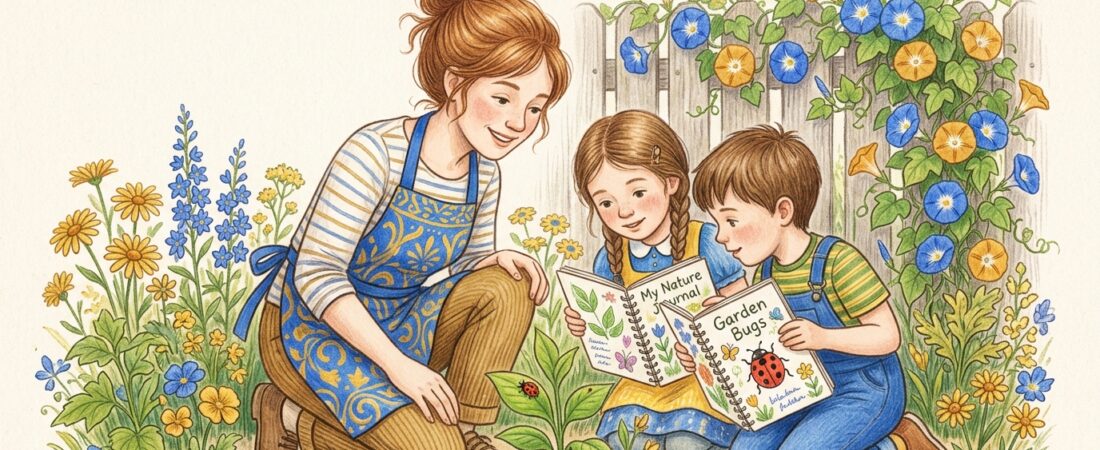
Second, introduce a nature journal. Even toddlers can participate in nature journaling in age-appropriate ways. A two or three-year-old might paste a pressed flower onto a page while you write the name of it for them. A six or seven-year-old can begin drawing simple sketches and labeling parts of what they observe. Older children ages eight through twelve can write detailed descriptions, record dates and weather conditions, and even look up scientific classifications. The nature journal becomes a treasured record of your family’s year spent noticing God’s creation.
Third, resist the urge to turn every nature walk into a formal lesson. Charlotte Mason emphasized that narration and noticing happen naturally when children are given time and freedom. Ask open-ended questions like, what do you see? or what does that remind you of? rather than quizzing them on facts. The goal is to cultivate wonder, and wonder cannot be forced.
For families who love a more structured resource to guide their outdoor observations, Simply Charlotte Mason offers a wealth of nature study helps that align beautifully with a Christian worldview.
Seasonal Ideas for Charlotte Mason Nature Study Across the Year
One of the most joyful aspects of Charlotte Mason nature study is that the curriculum writes itself season by season. Here are ideas for each time of year that will keep your children engaged and growing in their understanding of God’s creation throughout 2026.
In spring, focus on new growth and new life. This is a perfect season to study birds returning from migration, flower buds opening, and insects emerging from their winter rest. Connect these observations to the theme of resurrection and renewal that is central to the Christian faith. Let your children plant seeds in small pots and track their growth in the nature journal week by week.
In summer, take advantage of long days and warm evenings. Study pond life, butterflies, and garden vegetables. Nighttime offers opportunities to observe fireflies, stars, and moon phases. Summer is also ideal for nature hikes where older children can practice identifying trees by their leaves or birds by their calls.
In autumn, the world becomes a classroom of color and change. Press and preserve leaves, study the migration patterns of birds, and observe how animals prepare for winter. This season opens natural conversations about God’s provision and the wisdom built into His creation.
In winter, even bare branches and frost-covered grass offer lessons. Study animal tracks in the snow, observe evergreen trees and what makes them different from deciduous ones, and keep a weather log. Winter is also a wonderful season to go deeper with books and nature documentaries on days when going outside is difficult.
Connecting Charlotte Mason Nature Study to Your Christian Faith
One of the reasons Charlotte Mason nature study resonates so deeply with Christian homeschool families is that it naturally opens doors to conversations about God. Psalm 19:1 tells us that the heavens declare the glory of God, and Romans 1:20 reminds us that God’s invisible qualities are clearly seen through what He has made. Nature study puts these truths in your children’s hands and in front of their eyes every single week.
As you walk through your neighborhood or sit beside a stream, let Scripture guide your conversations. When your child marvels at a spider web, read aloud about how God clothes the lilies of the field. When you find a bird’s nest, talk about how God knows every sparrow that falls. These connections do not feel forced when they arise naturally from what your children are already observing.
You can also integrate nature study with your Bible curriculum and unit studies. A study of creation week pairs beautifully with a focused nature journal project where each day your family observes something from that day of creation. A study of the Psalms offers endless nature-themed passages to copy into journals and illustrate with watercolors or colored pencils.
For families wanting to explore more ways to weave faith into every subject, this guide on biblical worldview education offers practical and inspiring ideas for your homeschool.
Resources from Answers in Genesis can also be a helpful companion to your nature study, offering creation-based science explanations that support a biblical worldview as your children ask deeper questions about what they observe.
Charlotte Mason Nature Study Tools and Resources for Kids Ages 2 to 12
You do not need to spend a lot of money to build a rich Charlotte Mason nature study practice in your home. That said, a few well-chosen tools can make your outdoor hours even more meaningful and enjoyable.
For little ones ages two through five, simple magnifying glasses, bug catchers, and sturdy blank notebooks are all you need. At this age, the goal is purely sensory exploration. Let them touch bark, smell flowers, listen to birds, and splash in puddles. Their nature journal might simply be a place where you glue their finds and write their dictated observations.
For children ages six through nine, consider adding a beginner field guide for your region. A simple watercolor set for nature journaling, colored pencils, and a ruler for measuring specimens are all wonderful additions. At this age, children begin to love identifying what they find and can start making their own labeled sketches with growing detail.
For older children ages ten through twelve, a more advanced field guide, a nature journal with unlined pages, and access to good reference books deepen the experience considerably. These children can begin keeping a phenology calendar, which tracks recurring natural events by date each year, and can start doing simple experiments based on their observations.
No matter the age of your children, the most important tool you bring to Charlotte Mason nature study is your own curiosity and willingness to wonder alongside them. When your children see you stopping to notice a hawk overhead or bending down to look at a mushroom, they learn that the natural world is worth paying attention to, and that paying attention is itself an act of faith.
Start Your Charlotte Mason Nature Study Journey This Week
Charlotte Mason nature study is one of the most accessible, affordable, and spiritually enriching practices you can bring into your Christian homeschool in 2026. It requires no special expertise, no expensive curriculum, and no perfect setting. All it requires is a willing heart, a pair of open eyes, and a few minutes each day to step outside and notice what God has made.
Start small. Take a fifteen-minute walk with your children today and ask them one question: what do you notice? Bring a notebook and a pencil. Let them lead. You may be surprised at what they see when they are given the space to look.
If you are still exploring the right overall homeschool approach for your family, our Charlotte Mason homeschool guide is a great next step. And if you are looking for ways to make your entire homeschool more organized and peaceful, check out our tips on the best homeschool planners for moms to help you plan your nature study sessions with ease. Nature is waiting, and so is the wonder your children were made to experience.
Printables & faith-filled tees from our shop
Bible coloring and activity books, alphabet printables and homeschool planners — instant download, print at home. Plus Comfort Colors tees for homeschool moms who get it.
Every purchase supports this blog and keeps our free resources free.