Why Summer Homeschool Schedule Ideas Are Worth Planning
Summer can feel like a gift and a puzzle at the same time for Christian homeschool moms. The days stretch long, the kids are home, and the pressure to either go full-school or drop everything entirely can leave you paralyzed in the middle. That is exactly why having practical summer homeschool schedule ideas ready before Memorial Day hits makes such a difference. A gentle, intentional plan keeps your children growing in mind, character, and faith — without burning anyone out during the warmest months of the year. Whether your kids are 2 or 12, a well-thought-out summer rhythm can be the sweetest season of your whole homeschool year.
Faith Filled Learning is reader-supported. When you buy through links on our site, we may earn an affiliate commission at no extra cost to you.
How to Build a Summer Homeschool Routine That Actually Works
The key to a successful summer homeschool schedule is flexibility paired with just enough structure to keep the day from derailing by 9 a.m. Rather than replicating your school-year schedule hour by hour, think in terms of rhythm blocks: morning, midday, and afternoon. Each block has a general purpose, but none of them are rigid.
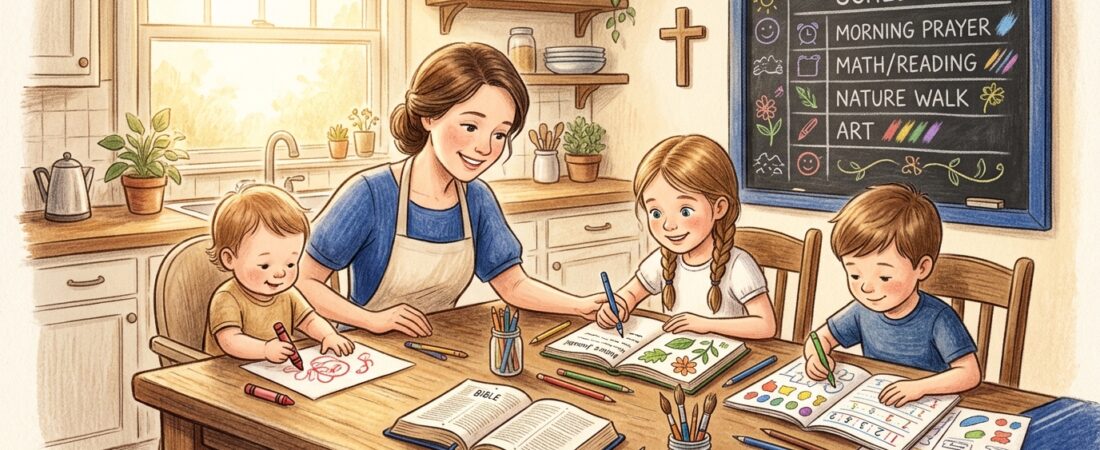
A simple rhythm that works beautifully for families with children ages 2–12 might look like this: start mornings with Bible time and a short read-aloud, move into focused learning activities for 60–90 minutes, enjoy outdoor free time in the late morning before the heat peaks, rest or do quiet independent work after lunch, and keep afternoons light with creative or life-skills projects. This kind of loose block schedule honors the slower pace of summer while still giving kids the predictability they need to feel secure.
If you have not already built a reliable homeschool routine, check out this helpful guide on how to create a homeschool schedule — many of those principles apply perfectly to summer planning as well.
For moms who want to stay organized through the summer months, a good planning tool is invaluable. The homeschool planner for moms can help you map out your weeks without feeling overwhelmed.
Summer Homeschool Schedule Ideas by Age Group
One of the biggest challenges in summer homeschooling is meeting every child where they are — a toddler and a 10-year-old have very different needs and attention spans. Here is a breakdown of what tends to work best by age in 2026.
Ages 2–4: Keep it simple and sensory-rich. Circle time with a short Bible story, a coloring page, playdough, water play, and nature walks are more than enough. Toddlers and preschoolers learn through movement and play, so resist the urge to formalize their time. A great resource to support early learning is this post on homeschooling a toddler and preschooler.
Ages 5–7: Early elementary kids do well with 20–30 minute focused lessons in phonics and math, followed by plenty of hands-on activities. Think read-alouds under a tree, nature journaling, and simple Bible copywork. Keep lessons short and sweet — engagement matters more than duration at this stage.
Ages 8–12: Older elementary kids can handle slightly longer sessions, about 45–60 minutes of focused academics in the morning, and they genuinely benefit from summer to dive deeper into a topic they love. History deep-dives, science experiments, writing projects, or a chapter book study can all anchor this age group. If you want to teach multiple children at once efficiently, this guide on teaching multiple ages at once is full of practical strategies.
Faith-Centered Activities to Anchor Your Summer Days
Summer homeschooling for Christian families is a beautiful opportunity to weave faith more deeply into daily life. When the academic pressure lightens, there is more room for the things that matter most — Scripture memory, character conversations, and growing a love for God’s creation.
Here are some faith-centered activities that fit naturally into summer homeschool schedule ideas for kids of all ages:
Morning devotions: Start each day with a short passage of Scripture and a simple prayer. Even young children can participate by repeating a memory verse. For tips on making Scripture stick, see these scripture memorization tips for kids.
Nature journaling: God’s creation is the perfect summer classroom. Give each child a blank journal and colored pencils and head outside to draw what they observe — insects, plants, clouds, birds. This practice builds observation skills, scientific thinking, and gratitude all at once. Simply Charlotte Mason has wonderful guidance on nature study if you want to explore this further.
Bible-based art projects: Combine creativity and faith by working through Bible-based homeschool art projects together. These work especially well as afternoon activities when everyone needs a creative outlet.
Family read-alouds: Summer is the ideal season to slow down and read rich, meaningful books together as a family. Choose stories that spark discussion about character, courage, and faith.
Service projects: Help your children see beyond themselves by planning a family service project — writing encouragement notes to elderly neighbors, donating food items, or helping at your church. These moments shape hearts in ways no curriculum can.
Keeping Learning Light Without Losing Momentum in 2026
One of the most common fears Christian homeschool moms voice about summer is falling behind. But here is the truth: children who read widely, explore God’s creation, practice life skills, and engage in meaningful conversations are absolutely continuing to learn — even without a formal lesson plan in front of them.
The goal for summer is not to replicate the school year in the sunshine. It is to keep the love of learning alive, maintain a few academic non-negotiables like daily reading and math practice, and give your whole family space to breathe and reconnect.
For families who want a light but complete academic option through summer, SchoolhouseTeachers.com is an online Christian homeschool membership from The Old Schoolhouse with courses across many subjects and grade levels — a wonderful solution for keeping older kids engaged without heavy planning on your part.
If you prefer a more structured summer curriculum for younger children, the Summer Bridge Activities workbook series offers grade-by-grade review in a manageable, colorful format that kids actually enjoy.
The goal is momentum, not perfection. A child who reads for 20 minutes each morning and completes a short math review page will arrive at fall in great shape — and far less burned out than one who crammed a full school year into July.
Frequently Asked Questions
How many hours a day should we homeschool in summer?
For most families, one to two hours of focused learning is plenty in summer. Younger children (ages 2–6) do well with just 30–60 minutes of intentional activity, while older kids (ages 7–12) can typically handle 60–90 minutes of academics before energy fades. The rest of the day can be filled with reading, outdoor play, creative projects, and life skills — all of which are genuine learning.
Do I have to homeschool through the summer or can we take a full break?
You absolutely can take a full break, and for many families that is exactly the right call. However, if your children struggle with transitions back to learning in fall, or if you use a year-round schedule, a lighter summer rhythm can prevent the “summer slide” and make September feel much smoother. Even a few minutes of reading aloud each day goes a long way.
What are some easy summer homeschool schedule ideas for moms who are burned out?
Start with the bare minimum: one Bible story, 15–20 minutes of reading, and free play outside. That is genuinely enough for summer. Unit studies built around your children’s interests — dinosaurs, oceans, cooking, gardening — are also a low-prep way to keep learning fun without heavy teacher prep. Give yourself permission to rest too. Homeschool mom burnout is real, and summer is your season to refuel.
How do I manage a summer schedule with both toddlers and older kids at the same time?
The key is staggered attention. While your toddler naps or plays independently with sensory bins, give your older children their focused lesson time. In the morning, gather everyone for Bible time and a read-aloud — those are activities all ages can share. Save one-on-one instruction for quiet windows, and lean heavily on activities that multiple ages can do side by side, like nature journaling, audiobooks, or art projects.
Make This Summer Your Most Intentional Season Yet
Summer does not have to be a scramble between keeping kids entertained and worrying about falling behind. With a little prayer, a loose plan, and the right summer homeschool schedule ideas in your back pocket, you can create a season that truly nourishes your whole family — spiritually, intellectually, and relationally.
Start small. Choose one or two rhythms from this article that resonate with your family’s needs and season of life. Build in margin for spontaneous adventures, lazy afternoons, and the unexpected grace of a slow summer morning. And remember that you are not just educating your children — you are discipling them, one faithful day at a time.
If you are looking for more ways to plan and organize your homeschool year, explore these printable planners for homeschool moms to help you map out the weeks ahead with confidence and peace. You have got this, mama — and this summer can be a beautiful one.
Printables & faith-filled tees from our shop
Bible coloring and activity books, alphabet printables and homeschool planners — instant download, print at home. Plus Comfort Colors tees for homeschool moms who get it.
Every purchase supports this blog and keeps our free resources free.