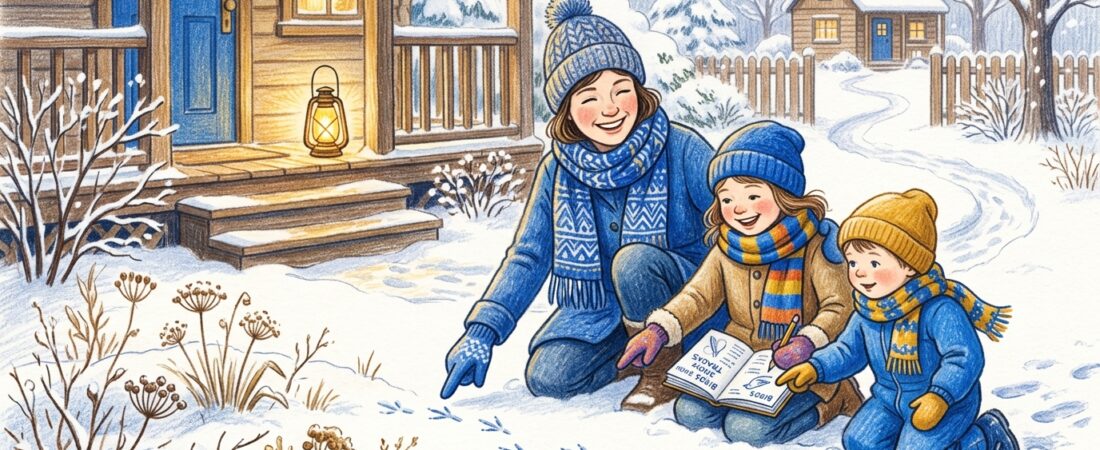
Winter is one of the most overlooked seasons for outdoor learning, but it is also one of the most magical. Winter nature study activities for kids give Christian homeschool families a beautiful opportunity to explore God’s creation even when temperatures drop and days grow short. From tracking animal footprints in the snow to sketching bare-branched trees in a nature journal, the cold months are full of wonder waiting to be discovered. Whether your children are toddlers or preteens, winter offers rich, hands-on learning that connects science, faith, and the beauty of the world God made.
Faith Filled Learning is reader-supported. When you buy through links on our site, we may earn an affiliate commission at no extra cost to you.
Why Winter Nature Study Belongs in Your Homeschool Year
Many homeschool moms pack away outdoor learning when autumn ends, but winter is actually a season brimming with scientific observation opportunities. When leaves fall and animals prepare for winter, the landscape becomes easier to observe. Bare trees reveal bird nests hidden all summer. Animal tracks are clearly pressed into snow and mud. The night sky is crisper and more visible in cold, dry air. These details invite children to slow down and really look at the world around them.
Nature study also aligns beautifully with a Charlotte Mason homeschool approach, which emphasizes living books, narration, and direct observation of the natural world. If you are already exploring nature-based learning in your home, winter is the perfect season to deepen that practice. You can learn more about this approach at Charlotte Mason nature study for homeschoolers.
From a faith perspective, winter nature study is a constant reminder that God is sovereign over every season. Psalm 147:16-17 celebrates God sending snow like wool and scattering frost like ashes. When children observe these phenomena firsthand, Scripture becomes vivid and personal rather than abstract.
Winter Nature Study Activities for Kids of Every Age
One of the greatest gifts of winter nature study is that it scales beautifully across ages. A two-year-old can crunch through leaves and press her mittened hand into fresh snow, while a twelve-year-old can research the hibernation cycles of local mammals and draw detailed sketches in a dedicated nature journal. Here are some of the best activities to try this season.
Nature Journaling: Encourage children to keep a winter nature journal where they sketch what they observe outside each week. Even young children can draw simple shapes of bare trees or trace a leaf they found on the ground. Older kids can label parts of a bird they spotted or note the weather conditions beside each entry. A beautifully illustrated guide like Handbook of Nature Study by Anna Botsford Comstock is a wonderful reference for families who want to go deeper with their observations. For more on getting started with nature journaling, visit nature journaling for kids in the Christian homeschool.
Animal Track Identification: After a snowfall, head outside to identify the tracks left by birds, rabbits, squirrels, and deer. Print a free track identification sheet or purchase a field guide to make this a structured science lesson. Older children can hypothesize about where the animal was going and what it might have been looking for.
Bird Watching and Feeding: Winter is one of the easiest times to observe birds because the bare branches leave them fully visible. Set up a bird feeder outside a window and keep a running log of every species your family spots. Younger children can color pictures of each bird while older kids write descriptive entries. A durable and weather-resistant Sibley Guide to Birds is an excellent family investment for identifying local winter species accurately.
Winter Botany Walks: Take a slow walk and collect items like seed pods, pine cones, dried berries, and mosses. Back indoors, examine them with a magnifying glass and discuss how God designed each plant to survive the cold. This works beautifully as part of a unit study on seasons or plant life cycles.
Sky and Weather Observation: Keep a simple weather journal where children record daily temperatures, cloud types, and precipitation. Over several weeks they will begin to see patterns, which introduces basic meteorology concepts in a completely natural way.
Bringing Winter Nature Study Indoors on Cold Days
Not every day is suitable for outdoor learning, and that is perfectly fine. There are many meaningful winter nature study activities for kids that can happen at the kitchen table or on the living room floor. Here are some indoor ideas that keep curiosity alive even on the coldest days.
Snowflake Science: Use a black piece of construction paper and a magnifying glass to catch and observe real snowflakes before they melt. Children are always amazed by the unique crystal structures. This is a natural entry point for discussing how God created each snowflake differently, just as He created each person uniquely.
Nature Art Projects: Use collected pine cones, dried seed pods, and pressed leaves to create seasonal art. Younger children love gluing nature items onto paper to make collages, while older kids can create more intentional botanical illustrations.
Reading and Research: Winter is a wonderful season for curling up with living books about animals and nature. Choose books that explore how creatures prepare for and survive winter, such as books on migration, hibernation, and adaptation. These connect seamlessly to faith conversations about God’s provision for every creature.
For families who want a structured science curriculum that naturally incorporates creation-based learning and seasonal observation, the best Christian homeschool science curriculum options can help you find a framework that complements your nature study practice. Resources from Apologia are particularly beloved by Christian homeschool families for their creation-based approach to science at every level.
Connecting Winter Nature Study to Scripture and Faith
One of the most powerful aspects of doing winter nature study as a Christian homeschool family is the natural way it weaves together science and faith. As you observe the created world together, you are doing theology as a family without it feeling forced or academic.
Read Psalm 104 aloud during a quiet morning and then head outside to look for evidence of what the psalm describes. Discuss how God clothes the mountains with snow as a garment and how He sends springs into the valleys. Ask your children what they notice about the way God takes care of His creation even in winter, when the world might look dormant or barren.
You can also use winter nature walks as a springboard for memorizing creation-focused Scriptures. Assign verses connected to winter imagery like Job 38:22, Psalm 147:16-17, or Isaiah 1:18 and recite them on your walks. This integrates Bible memorization into your outdoor learning in the most natural way possible.
If you are homeschooling multiple children across a wide age range, winter nature study is one of the easiest subjects to teach to everyone at once. You can find practical strategies for that at teaching multiple ages at once in your homeschool.
Frequently Asked Questions
How do I keep young toddlers engaged during outdoor winter nature study?
Toddlers learn best through sensory experiences, so keep it simple and hands-on. Let them touch snow, crunch dried leaves, collect pine cones, and listen to the quiet of winter. Keep outings short, maybe ten to fifteen minutes, and follow their lead. The goal at this age is building a love of being outside, not mastering concepts.
Do I need special supplies to start winter nature study with my kids?
You do not need much to get started. A simple blank notebook for sketching, a magnifying glass, and warm clothing are enough for most activities. A bird field guide and a pair of binoculars are helpful additions as your children grow more curious, but they are not required to begin.
What if we live somewhere with very mild winters and no snow?
Winter nature study works in every climate. In mild climates you can focus on winter birds, evergreen plants, dormant trees, and seasonal constellations. Pay attention to what changes in your environment even without snow. Many families in warmer states find winter is actually their most pleasant season for extended outdoor learning time.
How do I fit nature study into an already full homeschool schedule?
Nature study does not need to be a separate subject with its own time slot. You can weave it into science, writing, art, and Bible by using what your children observe outdoors as the foundation for other lessons. Even fifteen minutes of intentional outdoor observation a few times per week makes a meaningful difference over the course of a season.
Start Exploring God’s Winter Creation Today
Winter does not have to mean staying inside and waiting for spring to return. With a little intention and a willingness to bundle up, your family can turn these quiet months into some of your richest homeschool memories. Winter nature study activities for kids connect your children to the Creator, build observation and writing skills, and grow a lifelong love of learning in the most beautiful classroom God ever designed.
Choose one activity from this list and try it this week. Grab your coats, take a notebook outside, and see what wonders God has waiting for your family just beyond your front door. You might be surprised by how much is blooming even in the cold.
Printables & faith-filled tees from our shop
Bible coloring and activity books, alphabet printables and homeschool planners — instant download, print at home. Plus Comfort Colors tees for homeschool moms who get it.
Every purchase supports this blog and keeps our free resources free.